free powerpoint backgrounds templates
Free PowerPoint templates → backgrounds → presentations → downloads → blog → PowerPoint blog 

Tuesday, January 26, 2010
  Why You Should Never, Ever Crowdsource Your Presentation Title

Ugh.

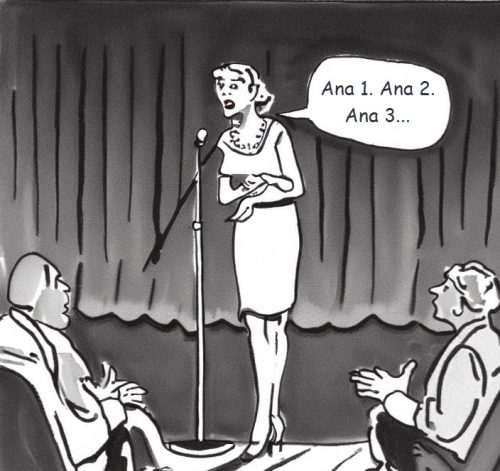
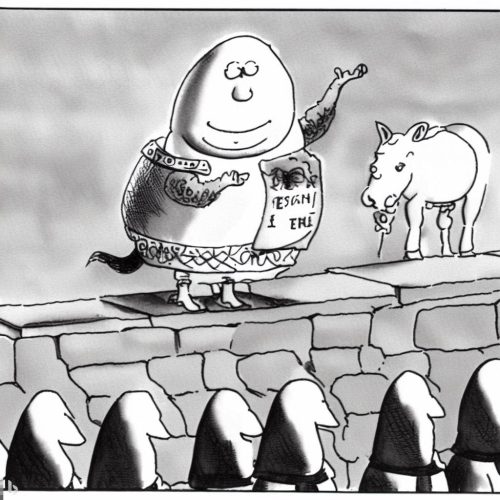
What presentation titles could possibly be more overused? If you're going to a presentation with one of these titles, you can be almost certain that the presentation is going to be every bit as boring and cliched as its headline. These kinds of titles are a red flag that show a lack of creativity and imagination on the part of the presenter.

In his hilarious + helpful book Confessions of a Public Speaker, Scott Berkun states very clearly that taking a strong position in your title is utterly essential. In his chapter titled "Eating the Mike", Mr.Berkum states that with a weak position, your talk may become...

"Here is everything I know I could cram into the time I have, but since I have no idea if you care, or what I would say if I had less time to talk, you get a half-baked, hard to follow, hard to present, pile of trash."

No kidding!Presentation Title Do
I've had to fight these "Naming the Presentation" battles over the past decade. I'll come up with a wonderfully effective and entertaining title, and the conference organizer will bill it as "X for Beginners".

I hate it when my name and face gets positioned next to that turd of a title. I sometimes fantasize about clearing things up with the audience:
"I know you think the title of this session is "Introduction to Social Media for Conference Planners 101", but that's a misprint. That was just a description of the TOPIC and AUDIENCE PROFILE that I discussed with the organizers so that I could build a relevant presentation for you. The actual TITLE of my presentation is "The Top 5 Most Horrifying Mistakes Conference Organizers Make and How to Fix Them Fast."
Yeah, I don't say anything like that.

What I do instead: Happily, I learned an important lesson from Mr. Berkun's book. I've been enjoying frank conversations with event planners about the importance of the title of the talk. I've made it clear that the topic, difficulty level, and audience profile may not have anything to do with the title we choose for the presentation. (They might, but they might not.)

For the moment, this approach seems to be working. Fancy that! Conference planners seem delighted to hear that the person they've hired is thinking about the audience, presentation content, marketing viability and title.

It seems that they're a smart bunch that values professionalism and creativity.

What doesn't work? Lately, I've actually seen speakers try to crowdsource their presentation titles on Twitter! How much of a bad idea is it to tweet:

"I'm giving a 101 presentation to a group of widget manufacturers. What should I call it?"

Honestly. Think about it. How the heck should someone who hasn't seen the content know what to name the presentation?

I suspect that presenters who crowdsource their titles have constructed a presentation so generic and half-baked that it could actually be named...

...anything.

How about:

"Here's some crap I know a little bit more about that you..."

Make no mistake: Cliched titles and crowdsourced titles are huge red flags that the presentation is a stinker. Don't crowdsource a title. Don't go to a presentation with a crowdsourced or cliched title.

Instead, take great care to construct your presentation content carefully -- and name your presentation effectively. If you don't know how, read Mr.Berkun's book. It's a very entertaining read -- but imparts helpful and practical advice along the way.

Labels: , ,

Tuesday, January 12, 2010
  How Twitter is Like Public Speaking

Speechwriters and presentation coaches often hear these three objections from new clients.

Today, I hear the same objections from clients when they talk about approaching Twitter.

Stage fright is being replaced with Twitter fright.

Twitter Stage Fright
It makes sense, in an odd way. Twitter, in part, is a public speaking platform. It's much more, of course: it's a public listening platform as well. And it's much less, of course: each Twitter utterance is limited to 140 characters.

But more fundamentally, Twitter is a new and growing communication platform. Learning to communicate well on Twitter may be every bit as essential as polishing and honing your public speaking and presentation skills.

When I hear someone who has yet to try Twitter say,

"I just don't know what I would say..." -- I often ask them to listen first, before talking. Use Twitter Search to find people who are Tweeting about topics that interest you. Or use Twitter Search advanced to find people in your local community who are tweeting about local events and issues. It's easier to enter a conversation that's already in progress about something that's inherently interesting to you -- than it is to be the one to start the conversational ball rolling. Eavesdrop on an interesting conversation already in progress -- and ask a question or show support. Later, when you've developed some rapport, you might find that you have plenty to say -- and you've got an audience that's more predisposed to listen.

"I can't believe anybody would care..."
-- Why is this so hard to believe? Here's a timeless truth: people care about people they know, like, and trust. And people care about their communities. And ideas they find interesting. And most people like to discuss topics of interest with other people. And yes, it sometimes includes recipes and food and music. Sometimes it includes humor, jokes, and talk about the weather. Oh, and from time to time, the conversation turns to talk about business. If you really "can't believe anybody would care..." -- make them care. Get to know them first. Get to like them. Get to understand them. Be a mensch. Get personally involved. Chances are, if you genuinely care about people and let them know it with a few minutes of chat or a link to an interesting idea, they will come to care about what you say.

"I think I'll make a fool out of myself..."
-- Don't worry. You'll make a fool of yourself at some point or another in your life. No one's immune from foolishness -- it's an essential part of the human condition. But the people who look like the biggest fools are people who claim knowledge -- without experience. As in the people who routinely say, "I think Twitter is stupid. It's a waste of time, so I'm not getting involved. But I will keep telling everyone I know how stupid I think it is..." Man, it's hard to convince me that Twitter is stupid when millions of people use it to a) find real-world friends b) get breaking news c) brainstorm great ideas d) build relationships that lead to new opportunities e) spread news about great causes and ideas... and a whole bunch more.

You're a social human being that longs to connect with other people. Twitter is an amazing communication platform that can help you do just that. Don't be scared or intimidated -- you'll find the people and ideas you care about being discussed on Twitter. Join the conversation, develop rapport, and start building relationships today!

ps -- if you have questions or comments, feel free to connect with me on Twitter. I tweet under the handle of @maniactive.

Labels: , ,

Friday, November 20, 2009
  Presenting with Twitter - Free Ebook

The Twitter backchannel is changing the way speakers deliver presentations. Twitter is also changing the way conference planners promote and manage events.

What do teachers, trainers, speakers, and conference planners need to know to keep up with these fast-breaking changes?

You can find out in a wonderfully written (and totally free!) ebook written by "Speaking About Presenting" blogger Olivia Mitchell. The comprehensive ebook, How to present with Twitter (and other backchannels) is available today for free download.

Presenting with Twitter ebook by Olivia Mitchell
My one-word review of this e-book?

"Wow!"

Olivia gave me the opportunity to review her ebook earlier this month. I was absolutely blown away by how thorough, enjoyable, and helpful her book is as a guide for preparing a presentation or event. Chocked with great tips, if you are planning a presentation, speech, or conference at the moment, here is my 4-step advice:
  1. Drop what you're doing.
  2. Visit Olivia's blog.
  3. Download & read this amazing 62-page book.
  4. Discuss -- how will the Twitter backchannel change the way you plan & present today?
PS - Be sure to follow Olivia Mitchell on Twitter @OliviaMitchell -- she's the engaging lady in New Zealand who frequently shares great ideas about presentation and speaking best practices.

Labels: ,

Friday, September 18, 2009
  Two Ways to Let Your Audience Co-Create Presentation Content

Your audience has the technology. They're carrying smart phones. They have net books or note books.

So why not let them use their snazzy tech tools to co-create presentations? Here are two tech-driven ways to let your audience co-create presentation content.

PollEverywhere. Audience interactivity is a big part of the draw of PollEverywhere. You ask your audience a question; they can answer using Twitter, text messages, or the web. The PollEverywhere online service instantly tabulates audience survey results in chart form in your PowerPoint presentation.

PollEverywhereI used PollEverywhere in class earlier this week -- it took me only a few minutes to craft a few cheeky surveys using the service. Downloading the poll as a PowerPoint slide (ppt or pptx) was a smooth, one-click operation. When students took the poll, results weren't exactly immediate -- I estimated a 15-20 second lag time before the graph started moving and changing before our eyes. Not bad at all.

PollEverywhere also allows you to ask open-ended questions as well as create bar or column charts. You may download survey results in CSV format, tweak colors and font sizes, and embed polls in web pages. This tool is very simple to use, yet fun and potentially quite powerful. Free for a small audience of 30 or less, PollEverywhere also provides more robust options with its paid services for use with larger audiences.

Twitter Hashtags. In the 1990's, I would often moderate candidate forums during election years. To keep these town hall meetings civil, we would pass out index cards and ask the audience to write out their candidate questions. Audience members passed their written questions to volunteers who made sure that the most popular and well-framed questions were brought forward to my lectern.

Today's audience may warm to a similar approach that is more transparent than using index cards. Why not ask a modern audience to Tweet their questions with a special Twitter hashtag for panel discussions? This lets a tech-savvy audience easily see the most popular and well-framed questions, while preventing boors from hijacking the Q&A portion of the program with tiresome or poorly-framed questions. Services like Tweetchat and Twitterfall let the panel and audience easily visualize the scope of questions surrounding the topic at a larger meeting, forum, or conference.

How else have you used technology to encourage audience interaction in your presentations? What works well? What doesn't?

Labels: , ,

Friday, September 04, 2009
  How do you EARN attention when presenting?

"No computers or handhelds during my presentation," barks a presenter. "I don't know whether you're playing games or paying attention. For the next hour, all eyes up here, on me!"

Olhos
Creative Commons License photo credit: Ana Marta 7

I ignore this insane outburst, of course. I'm an adult. So is the rest of the audience. I take notes on my notebook PC. If the guy has something pithy to say, I might even rock it out on Twitter, give him credit, and spread his idea further.

After his presentation, the fellow rebuked me for failing to follow his pre-presentation command. I was being rude by typing as he talked, he insisted.

On the contrary, I protested. I was there to learn from him, not to pacify his ego by staring adoringly at him while he ignored the needs of his audience.

In fact, I told him I glanced up from my computer numerous times. I looked at his PowerPoint slides, but the text was too small for me to read, so I looked at him. His body language -- back to the audience as he read the text from the slides -- didn't hold my visual interest, so my eyes went back to my computer screen. Because he was long-winded, he didn't give me any short concepts to Tweet, so his ideas didn't spread beyond the room.

I have an obligation to be a good audience member. It means that my mobile phone is silenced, so that I don't annoy others. It means that I give back energy to the presenter -- I laugh if something's funny, applaud if I am moved, nod quietly with agreement, raise my hand to ask questions, make eye contact at times, or participate in activities or discussions when I am asked courteously. Otherwise, I remain silent and take notes.

As a presenter, I note that my audience is often texting or typing while I talk. They might indeed be playing games or doing something non-work related. They also might be taking notes, learning, and sharing ideas.

It's not about me and my needs, it's about the audience. A modern audience uses modern tools. As a presenter, I need to learn to adapt my style to fit their needs. Why should the audience have to pacify my selfish needs for their attention? Why should I force my audience to stop using tools that let them learn and share information?

As a presenter, I need to EARN attention. If I'm interesting, the audience is more likely to be interested. They might express their interest in a different way: years back, they might have nodded and jotted down a note. Today, they might nod and type.

Get used to it. Don't churlishly tell your audience to PAY attention. Instead, be so phenomenally entertaining or interesting that they can't help but GIVE you their attention!

How do you EARN attention when presenting to a modern, tech-savvy audience?

Labels: , , ,

Tuesday, July 14, 2009
  Crowdsourcing Presentation Content with Twitter

What's Crowdsourcing? According to Wikipedia, crowdsourcing is outsourcing a task to a large group of people in an open call. For example, when I was asked to present on the topic of social media & reputation management to an audience of college students earlier this month, I turned to the community at Twitter as an exercise in presentation content crowdsourcing.

Using the medium to help create the message, I posed my situation and asked a question:


Within hours, I received a dozen or so intriguing replies. It struck me that many of the replies looked -- and read -- like fortune cookies. So I felt whimsically inspired to use a prophetic design treatment for some of the Twittered replies. Ergo,


and


In some cases, I worked the Tweet into the overall landscape of the Twittered prophecy.


Give credit where it's due. When I showed each of the crowdsource quotations, I gave verbal credit to the contributor, stating their name, city, and occupation. The Tweet itself shows each of their Twitter " handles="" or="" thanks="">LisaBraithwaite @JGaler @AnitaCochran) . The audience discussed the twittered advice. Each slide served as a backdrop for an interactive discussion.

Why Crowdsource Content?
Frankly, at the time I turned to Twitter for content ideas because it sounded like fun -- and because it would be very easy to do. I'm also acutely interested in what professionals who participate in social media circles might have to say on the subject -- and how they'd say it. Additionally, I thought that the students in my audience would also be interested in this very relevant perspective and voice, as well.

I also found four other reasons to crowdsource presentation content:

1. Introduce a fresh voice. As a speaker, you express your own point of view and personality. And you'll use your own pace, pitch, tone, and vernacular. A fresh, new voice can add both visual and auditory interest -- while supporting your key points.

2. Introduce fresh ideas. Through crowdsourcing, you may be exposed to new ideas that can enhance the content and tone of your presentation. The Twitter community gave me plenty of content to support my overall thesis -- but they also encouraged me to explore a new dynamic that may previously have gone uncovered.

3. Strengthen the audience connection to the content. Presenters often use a pithy quotation from a famous person to help convey a point. But why limit your quotations to famous people? Getting a quote from a respected professional with a unique point of view can be engaging for the audience. Using a quote from a "real" person can make the content more personal.

4. Why not? How hard is it to ask a question to a group of people? The worst that can happen is that no one responds, and you're out a few seconds of your time! Weigh that against the best that can happen - you gain new insights into your topic that you haven't realized before. You get smarter. You get to build and strengthen ideas. Your audience benefits from stronger, more personal content. And along the way, you meet interesting people who like to talk about ideas.

What other reasons might you decide to crowdsource a presentation? And what might hold you back from getting ideas from people in the crowd? :)

(For another example of crowdsourcing, feel free to respond to this question about college graduation keynote speeches!)

Labels: , , ,

Monday, March 30, 2009
  PowerPoint Pet Peeve: The Passive Voice

Which sentence do you like better?
Both sentences relay the same information. So why do you like the second one better?
When I listen to speakers who almost exclusively rely upon the passive voice, I go a little bonkers. Why?

Cascabel
Creative Commons License photo credit: Jacob Garcia

The passive voice is mushy and weaselly. It signals that the speaker is trying to hide something. When someone says, "Mistakes were made ," I instantly want to spring up and scream, "By whom?"

If one more benefit shakes out of using Twitter, let it be a giant reduction in people using the passive voice. Active voice is shorter, swifter, and more powerful. It takes responsibility. It's the stronger, nobler choice.

I have no idea why so many presenters use the passive voice. Do you?

And what are your grammatical presentation pet peeves?

(Of course, it might be a fun exercise to write your blog comments, exclusively using the passive voice. That might help me exorcise my peevishness!)

Labels: , ,

Saturday, March 07, 2009
  How Twitter Can Enhance Your Presentation

Much ado over a Twittering Congress. Last week during the President's address to the joint session of Congress, some members Twittered through the speech. Almost immediately, two basic attitude camps sprang up among pundits:

1. How dare they! Congress should be paying rapt attention, not providing color commentary.
2. Kudos! Now, the public gets to immediately know what's going on in the minds of elected officials.
Texting
Creative Commons License photo credit: ydhsu

How dare they! The "How dare they" camp comes across as quaint, old-fashioned. Traditional presenters bristled with comments like: "if someone is Twittering during a presentation, it means that the speaker is not keeping their interest and attention. They're failures as presenters!" Another "how dare they" comment reflected the cell phone disruptions from the 1990's - remember the days when presenters reminded everyone to turn off their cell phones and pagers?

The kudos camp. People who embrace the Congressional Tweetstream are facing the inevitable: more and more people WILL Tweet during your presentation. People have been making color commentary behind the speaker's back for ages -- with Twitter, it all becomes immediate and public. And it's not going to stop any time soon. In fact, Twitter backchannel behavior only going to grow and thrive. Instead of fighting it, learn to embrace it! Plan on it!

Three Quick Ways to Harness the Power of Twitter to Enhance Your Presentation.

1. Think in terms of one-liners and sound bites.
Unlike a cell phone ringing, Tweeting during a speech is not disruptive. It is akin to a laugh line or an applause line. Think of it this way: when a comedian drops a one-liner, he or she waits a beat for the audience to process the joke. After the beat, the audience bursts out in laughter. When you give a presentation to a Twittering audience, you'll want to think in terms of sound bites and one liners, too. Drop a few Twitter liners into your speech, then pause. Wait for the audience to process the thought. Then, resume speaking when the sounds of thumbs clattering away on mobile texting devices die down.

2. Plan for Tweeting audiences. Over at the Speaking About Presenting blog, Olivia Mitchell shares her experiences of presenting live to a Twittering audience. Ms. Mitchell outlines 8 key points she learned while presenting to a Twittering audience. Rather than reiterate them here, go read them! Olivia and other presenters are embracing Twitter, and inventing new methods to connect with a socially savvy audience. The advantages of connecting with your audience's preferred way of communication are clear. The bonus? You can spread your messages farther & faster when you communicate appropriately for a Tweeting audience!

3. Devise hashtags for your presentation. Hopefully, your conference or meeting organizer will assign a hashtag for the conference. If they haven't, make sure you come up with one that's short, memorable, and unique. Encourage your audience to tag their Tweets. When you later search for tagged Tweets , you'll get a stream of your backchannel commentary. You'll know which lines worked, which didn't, and which spread like wildfire. Hashtags let you more effectively spread your presentation to an audience beyond the room. Hashtags also let you critique your presentation, so that you can become a better speaker.

What other ways might you change your presentation style to more positively connect with a Twittering audience?

Labels: , ,


>>> Contact Laura!

Laura Bergells on Facebook
RSS subscribers

SIGN UP FOR FREE EMAIL UPDATES:

Enter your email address:


...OR LET ME "FEED" YOU! PowerPoint blog 

AddThis Feed Button

Archives
07/03 / 08/03 / 10/03 / 11/03 / 12/03 / 01/04 / 03/04 / 04/04 / 07/04 / 02/05 / 03/05 / 04/05 / 05/05 / 06/05 / 07/05 / 08/05 / 09/05 / 10/05 / 11/05 / 12/05 / 01/06 / 02/06 / 03/06 / 04/06 / 05/06 / 06/06 / 07/06 / 08/06 / 09/06 / 10/06 / 11/06 / 12/06 / 01/07 / 02/07 / 03/07 / 04/07 / 05/07 / 06/07 / 07/07 / 08/07 / 09/07 / 10/07 / 11/07 / 12/07 / 01/08 / 02/08 / 03/08 / 04/08 / 05/08 / 06/08 / 07/08 / 08/08 / 09/08 / 10/08 / 11/08 / 12/08 / 01/09 / 02/09 / 03/09 / 04/09 / 05/09 / 06/09 / 07/09 / 08/09 / 09/09 / 10/09 / 11/09 / 12/09 / 01/10 / 02/10 / 03/10 / 04/10 /


Powered by Blogger

Subscribe to
Posts [Atom]

Bergells Lifestream

Internet Marketing Chunks