free powerpoint backgrounds templates
Free PowerPoint templates → backgrounds → presentations → downloads → blog → PowerPoint blog 

Tuesday, January 26, 2010
  Why You Should Never, Ever Crowdsource Your Presentation Title

Ugh.

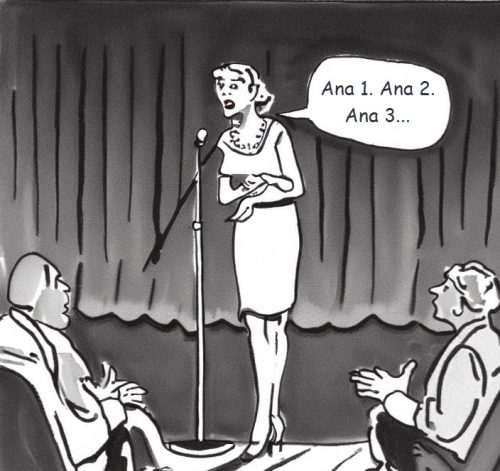
What presentation titles could possibly be more overused? If you're going to a presentation with one of these titles, you can be almost certain that the presentation is going to be every bit as boring and cliched as its headline. These kinds of titles are a red flag that show a lack of creativity and imagination on the part of the presenter.

In his hilarious + helpful book Confessions of a Public Speaker, Scott Berkun states very clearly that taking a strong position in your title is utterly essential. In his chapter titled "Eating the Mike", Mr.Berkum states that with a weak position, your talk may become...

"Here is everything I know I could cram into the time I have, but since I have no idea if you care, or what I would say if I had less time to talk, you get a half-baked, hard to follow, hard to present, pile of trash."

No kidding!Presentation Title Do
I've had to fight these "Naming the Presentation" battles over the past decade. I'll come up with a wonderfully effective and entertaining title, and the conference organizer will bill it as "X for Beginners".

I hate it when my name and face gets positioned next to that turd of a title. I sometimes fantasize about clearing things up with the audience:
"I know you think the title of this session is "Introduction to Social Media for Conference Planners 101", but that's a misprint. That was just a description of the TOPIC and AUDIENCE PROFILE that I discussed with the organizers so that I could build a relevant presentation for you. The actual TITLE of my presentation is "The Top 5 Most Horrifying Mistakes Conference Organizers Make and How to Fix Them Fast."
Yeah, I don't say anything like that.

What I do instead: Happily, I learned an important lesson from Mr. Berkun's book. I've been enjoying frank conversations with event planners about the importance of the title of the talk. I've made it clear that the topic, difficulty level, and audience profile may not have anything to do with the title we choose for the presentation. (They might, but they might not.)

For the moment, this approach seems to be working. Fancy that! Conference planners seem delighted to hear that the person they've hired is thinking about the audience, presentation content, marketing viability and title.

It seems that they're a smart bunch that values professionalism and creativity.

What doesn't work? Lately, I've actually seen speakers try to crowdsource their presentation titles on Twitter! How much of a bad idea is it to tweet:

"I'm giving a 101 presentation to a group of widget manufacturers. What should I call it?"

Honestly. Think about it. How the heck should someone who hasn't seen the content know what to name the presentation?

I suspect that presenters who crowdsource their titles have constructed a presentation so generic and half-baked that it could actually be named...

...anything.

How about:

"Here's some crap I know a little bit more about that you..."

Make no mistake: Cliched titles and crowdsourced titles are huge red flags that the presentation is a stinker. Don't crowdsource a title. Don't go to a presentation with a crowdsourced or cliched title.

Instead, take great care to construct your presentation content carefully -- and name your presentation effectively. If you don't know how, read Mr.Berkun's book. It's a very entertaining read -- but imparts helpful and practical advice along the way.

Labels: , ,

Tuesday, January 12, 2010
  How Twitter is Like Public Speaking

Speechwriters and presentation coaches often hear these three objections from new clients.

Today, I hear the same objections from clients when they talk about approaching Twitter.

Stage fright is being replaced with Twitter fright.

Twitter Stage Fright
It makes sense, in an odd way. Twitter, in part, is a public speaking platform. It's much more, of course: it's a public listening platform as well. And it's much less, of course: each Twitter utterance is limited to 140 characters.

But more fundamentally, Twitter is a new and growing communication platform. Learning to communicate well on Twitter may be every bit as essential as polishing and honing your public speaking and presentation skills.

When I hear someone who has yet to try Twitter say,

"I just don't know what I would say..." -- I often ask them to listen first, before talking. Use Twitter Search to find people who are Tweeting about topics that interest you. Or use Twitter Search advanced to find people in your local community who are tweeting about local events and issues. It's easier to enter a conversation that's already in progress about something that's inherently interesting to you -- than it is to be the one to start the conversational ball rolling. Eavesdrop on an interesting conversation already in progress -- and ask a question or show support. Later, when you've developed some rapport, you might find that you have plenty to say -- and you've got an audience that's more predisposed to listen.

"I can't believe anybody would care..."
-- Why is this so hard to believe? Here's a timeless truth: people care about people they know, like, and trust. And people care about their communities. And ideas they find interesting. And most people like to discuss topics of interest with other people. And yes, it sometimes includes recipes and food and music. Sometimes it includes humor, jokes, and talk about the weather. Oh, and from time to time, the conversation turns to talk about business. If you really "can't believe anybody would care..." -- make them care. Get to know them first. Get to like them. Get to understand them. Be a mensch. Get personally involved. Chances are, if you genuinely care about people and let them know it with a few minutes of chat or a link to an interesting idea, they will come to care about what you say.

"I think I'll make a fool out of myself..."
-- Don't worry. You'll make a fool of yourself at some point or another in your life. No one's immune from foolishness -- it's an essential part of the human condition. But the people who look like the biggest fools are people who claim knowledge -- without experience. As in the people who routinely say, "I think Twitter is stupid. It's a waste of time, so I'm not getting involved. But I will keep telling everyone I know how stupid I think it is..." Man, it's hard to convince me that Twitter is stupid when millions of people use it to a) find real-world friends b) get breaking news c) brainstorm great ideas d) build relationships that lead to new opportunities e) spread news about great causes and ideas... and a whole bunch more.

You're a social human being that longs to connect with other people. Twitter is an amazing communication platform that can help you do just that. Don't be scared or intimidated -- you'll find the people and ideas you care about being discussed on Twitter. Join the conversation, develop rapport, and start building relationships today!

ps -- if you have questions or comments, feel free to connect with me on Twitter. I tweet under the handle of @maniactive.

Labels: , ,

Friday, September 04, 2009
  How do you EARN attention when presenting?

"No computers or handhelds during my presentation," barks a presenter. "I don't know whether you're playing games or paying attention. For the next hour, all eyes up here, on me!"

Olhos
Creative Commons License photo credit: Ana Marta 7

I ignore this insane outburst, of course. I'm an adult. So is the rest of the audience. I take notes on my notebook PC. If the guy has something pithy to say, I might even rock it out on Twitter, give him credit, and spread his idea further.

After his presentation, the fellow rebuked me for failing to follow his pre-presentation command. I was being rude by typing as he talked, he insisted.

On the contrary, I protested. I was there to learn from him, not to pacify his ego by staring adoringly at him while he ignored the needs of his audience.

In fact, I told him I glanced up from my computer numerous times. I looked at his PowerPoint slides, but the text was too small for me to read, so I looked at him. His body language -- back to the audience as he read the text from the slides -- didn't hold my visual interest, so my eyes went back to my computer screen. Because he was long-winded, he didn't give me any short concepts to Tweet, so his ideas didn't spread beyond the room.

I have an obligation to be a good audience member. It means that my mobile phone is silenced, so that I don't annoy others. It means that I give back energy to the presenter -- I laugh if something's funny, applaud if I am moved, nod quietly with agreement, raise my hand to ask questions, make eye contact at times, or participate in activities or discussions when I am asked courteously. Otherwise, I remain silent and take notes.

As a presenter, I note that my audience is often texting or typing while I talk. They might indeed be playing games or doing something non-work related. They also might be taking notes, learning, and sharing ideas.

It's not about me and my needs, it's about the audience. A modern audience uses modern tools. As a presenter, I need to learn to adapt my style to fit their needs. Why should the audience have to pacify my selfish needs for their attention? Why should I force my audience to stop using tools that let them learn and share information?

As a presenter, I need to EARN attention. If I'm interesting, the audience is more likely to be interested. They might express their interest in a different way: years back, they might have nodded and jotted down a note. Today, they might nod and type.

Get used to it. Don't churlishly tell your audience to PAY attention. Instead, be so phenomenally entertaining or interesting that they can't help but GIVE you their attention!

How do you EARN attention when presenting to a modern, tech-savvy audience?

Labels: , , ,

Monday, July 27, 2009
  The Days of Talking Heads Are Nearly Over

I ♥ David Byrne.

I even ♥ David Byrne's "I ♥ PowerPoint."

Really, I do.

But the days of the Talking Heads are over.

I'm not talking about the band. I'm talking TV. And presenters. And presentations.

We have social media to thank.

I ♥log
Creative Commons License photo credit: andyket

Interactive presentations are in.

Authoritative anchors reading dispassionately from teleprompters are out.

Teachers and professors lecturing from on high? Also on the way out.

Note your TV news shows asking, "What do you think? Talk back. Send us your video. Talk to us at Twitter. Comment on our blog...."

Walter Cronkite, bless his trusted soul, didn't ply his trade in an era of interactivity. He was a talking head, appropriate for the decades he served. A deep authoritative voice coupled with a kind-looking face served him well in his time.

Today, Jon Stewart is the most trusted man in TV news. Well, not really. People just voted him as the most trusted newscaster.

In an online poll.

By Time Magazine.

See what I mean? Online polls. Talking back. Old-school journalism meets citizen journalism. Opinions. Interactivity. It's all the rage.

Burning down the house. Last week, Stewart jokingly called his second-place poll rival (TV news anchor Brian Williams) a "teleprompter monkey."

Does that make the new style of news anchor, a "hyper-interactive monkey?"

And how are you using social media to make your presentations more interactive, compelling, and contemporary?

Labels: , ,

Tuesday, July 14, 2009
  Crowdsourcing Presentation Content with Twitter

What's Crowdsourcing? According to Wikipedia, crowdsourcing is outsourcing a task to a large group of people in an open call. For example, when I was asked to present on the topic of social media & reputation management to an audience of college students earlier this month, I turned to the community at Twitter as an exercise in presentation content crowdsourcing.

Using the medium to help create the message, I posed my situation and asked a question:


Within hours, I received a dozen or so intriguing replies. It struck me that many of the replies looked -- and read -- like fortune cookies. So I felt whimsically inspired to use a prophetic design treatment for some of the Twittered replies. Ergo,


and


In some cases, I worked the Tweet into the overall landscape of the Twittered prophecy.


Give credit where it's due. When I showed each of the crowdsource quotations, I gave verbal credit to the contributor, stating their name, city, and occupation. The Tweet itself shows each of their Twitter " handles="" or="" thanks="">LisaBraithwaite @JGaler @AnitaCochran) . The audience discussed the twittered advice. Each slide served as a backdrop for an interactive discussion.

Why Crowdsource Content?
Frankly, at the time I turned to Twitter for content ideas because it sounded like fun -- and because it would be very easy to do. I'm also acutely interested in what professionals who participate in social media circles might have to say on the subject -- and how they'd say it. Additionally, I thought that the students in my audience would also be interested in this very relevant perspective and voice, as well.

I also found four other reasons to crowdsource presentation content:

1. Introduce a fresh voice. As a speaker, you express your own point of view and personality. And you'll use your own pace, pitch, tone, and vernacular. A fresh, new voice can add both visual and auditory interest -- while supporting your key points.

2. Introduce fresh ideas. Through crowdsourcing, you may be exposed to new ideas that can enhance the content and tone of your presentation. The Twitter community gave me plenty of content to support my overall thesis -- but they also encouraged me to explore a new dynamic that may previously have gone uncovered.

3. Strengthen the audience connection to the content. Presenters often use a pithy quotation from a famous person to help convey a point. But why limit your quotations to famous people? Getting a quote from a respected professional with a unique point of view can be engaging for the audience. Using a quote from a "real" person can make the content more personal.

4. Why not? How hard is it to ask a question to a group of people? The worst that can happen is that no one responds, and you're out a few seconds of your time! Weigh that against the best that can happen - you gain new insights into your topic that you haven't realized before. You get smarter. You get to build and strengthen ideas. Your audience benefits from stronger, more personal content. And along the way, you meet interesting people who like to talk about ideas.

What other reasons might you decide to crowdsource a presentation? And what might hold you back from getting ideas from people in the crowd? :)

(For another example of crowdsourcing, feel free to respond to this question about college graduation keynote speeches!)

Labels: , , ,

Wednesday, July 08, 2009
  Three Transparently Phony Ways to Appear Less Confident

Confidence. Somehow, this word became virtuous in the 1980's. It remained a positive trait -- until fairly recently.

Confidence men, we called them in the 1930's and 40's. Over time, we shortened this to "Con Men" or "Cons". Overly charming, smooth. Hucksters. Yech.

Cons transmit that they are absolutely positive in their correctness. Who trusts the overly confident?

Bernie Madoff and his ilk have made us collectively uneasy about confidence again.

Striped bachelor
Creative Commons License photo credit: Matti Mattila

How to appear less confident

If you're an overly confident speaker, you might have a big problem connecting with a modern, tech-savvy audience. (Especially here in the American Midwest!) In an era of quickly produced, less-than-polished user generated content -- your confidence might seem inappropriately over-the-top.

Here are 3 quick and completely insincere ways to tone down any over-confidence you may have as a speaker or presenter.
  1. Toss in filler words. A few, "ums and ahhs" and nervous shuffling can go a long way to instill the idea that you're thinking about what you're saying. You're not glibly reciting a speech. You're not absolutely convinced that you are unequivocally correct. You're open to starting conversations and creating a dialog. Your social awkwardness in public speaking indicates that you're thinking. That you're concerned. That you care enough to be nervous. Audiences warm to this kind of humility.

  2. Ugly up your PowerPoint slides. Nothing says, "I'm overly image conscious" like professionally designed PowerPoint presentations. When it looks like a presenter spent 80 hours in meetings with a team of designers, writers, and speech coaches to deliver a one-hour presentation -- that's the take-away. That's what the audience will talk about behind the speaker's back. The message won't stick when all people talk about is how pretty the slides were and how Hollywood the storytelling was.

  3. Dress out-of-sync. I watched a multi-millionaire give a presentation to 200+ business people. The audience? In modern business attire. The presenter? In a sad, schlumpfly suit from the 1980's. The audience LOVED him. Think they merely tolerated his eccentric garb because he was rich? Guess again. I also watched a junior software engineer wearing an unpressed polo shirt and lumpy khakis present to a board wearing business suits. They ADORED his presentation, too.
If you're an awkward or eccentric speaker, rejoice. This is your time! Embrace your humility! Hug your weirdness!

And if you're a con artist, your audience will likely see through your naked attempts to "Aw, shucks it up" for them. After all, this is the age of authenticity and transparency -- two achingly glorious buzzwords that shine a bright, unflattering spotlight on slick over-confidence and transparently phony faux-humility mannerisms.

Social awkwardness is in!

Nerds, enjoy it while it lasts...

What will the next wave of popularity be?

Labels: , , ,

Saturday, March 07, 2009
  How Twitter Can Enhance Your Presentation

Much ado over a Twittering Congress. Last week during the President's address to the joint session of Congress, some members Twittered through the speech. Almost immediately, two basic attitude camps sprang up among pundits:

1. How dare they! Congress should be paying rapt attention, not providing color commentary.
2. Kudos! Now, the public gets to immediately know what's going on in the minds of elected officials.
Texting
Creative Commons License photo credit: ydhsu

How dare they! The "How dare they" camp comes across as quaint, old-fashioned. Traditional presenters bristled with comments like: "if someone is Twittering during a presentation, it means that the speaker is not keeping their interest and attention. They're failures as presenters!" Another "how dare they" comment reflected the cell phone disruptions from the 1990's - remember the days when presenters reminded everyone to turn off their cell phones and pagers?

The kudos camp. People who embrace the Congressional Tweetstream are facing the inevitable: more and more people WILL Tweet during your presentation. People have been making color commentary behind the speaker's back for ages -- with Twitter, it all becomes immediate and public. And it's not going to stop any time soon. In fact, Twitter backchannel behavior only going to grow and thrive. Instead of fighting it, learn to embrace it! Plan on it!

Three Quick Ways to Harness the Power of Twitter to Enhance Your Presentation.

1. Think in terms of one-liners and sound bites.
Unlike a cell phone ringing, Tweeting during a speech is not disruptive. It is akin to a laugh line or an applause line. Think of it this way: when a comedian drops a one-liner, he or she waits a beat for the audience to process the joke. After the beat, the audience bursts out in laughter. When you give a presentation to a Twittering audience, you'll want to think in terms of sound bites and one liners, too. Drop a few Twitter liners into your speech, then pause. Wait for the audience to process the thought. Then, resume speaking when the sounds of thumbs clattering away on mobile texting devices die down.

2. Plan for Tweeting audiences. Over at the Speaking About Presenting blog, Olivia Mitchell shares her experiences of presenting live to a Twittering audience. Ms. Mitchell outlines 8 key points she learned while presenting to a Twittering audience. Rather than reiterate them here, go read them! Olivia and other presenters are embracing Twitter, and inventing new methods to connect with a socially savvy audience. The advantages of connecting with your audience's preferred way of communication are clear. The bonus? You can spread your messages farther & faster when you communicate appropriately for a Tweeting audience!

3. Devise hashtags for your presentation. Hopefully, your conference or meeting organizer will assign a hashtag for the conference. If they haven't, make sure you come up with one that's short, memorable, and unique. Encourage your audience to tag their Tweets. When you later search for tagged Tweets , you'll get a stream of your backchannel commentary. You'll know which lines worked, which didn't, and which spread like wildfire. Hashtags let you more effectively spread your presentation to an audience beyond the room. Hashtags also let you critique your presentation, so that you can become a better speaker.

What other ways might you change your presentation style to more positively connect with a Twittering audience?

Labels: , ,

Thursday, February 12, 2009
  How Public Speaking Can Make You Richer, Thinner, and Better in Bed

Bill Gates released a container of mosquitoes as part of his presentation schtick at the exclusive TED conference last week. Apparently, his gimmick intended to teach a privileged TED audience that mosquitoes cause malaria.

However, what happens at TED doesn't stay at TED. Gates' stunt earned major media buzz. The worldwide backchannel chatter is that Microsoft unleashes bugs on unsuspecting people.

This gives us two public speaking lessons to think about.
  1. Blowing Smoke: Outrageous acts and claims get attention.
  2. The Larger Audience: The folks in front of you may not be your primary audience.

Blowing Smoke. Check your email inbox - especially the junk folder. Flip on a TV or glance at a magazine rack. How many outrageous headlines and claims do you see?

Many of us are bombarded daily with outrageous claims. A pervasive part of our daily landscape, we suck in outrage as if it were oxygen.

Details? Features? Specificity? Facts? Information? Not so much. Those tend to get buried.

Due to overexposure, are many of us becoming just a little immune to this approach? Or at least more weary? A wee bit more skeptical?

Or are we as happy as ever just to know we're going to be richer, thinner, and better in bed -- never mind the nagging details about how all of these benefits are going to come to fruition?

The answer, of course, is apparent. People talked about Gates' outrageous act -- they didn't chat about the facts and figures he presented to support his claims.

Are you with me, camera guy? Outrageous stunts and outrageous claims get attention. People talk about them. So they spread like malaria.

The Larger Audience. The live audience of rich people at TED wasn't Gates' primary audience. Gates got his message out to a much larger worldwide audience.

Similarly, the audience in front of you may not be your real target. How can you effectively combine outrage and social media to make sure people talk about your ideas -- so that you can gain a much larger audience?

Remember the 2006 White House Correspondents' Association Dinner. Stephen Colbert was the speaker -- and he gave a satirical presentation that did not, um, resonate comfortably with the live audience in front of him. However, Colbert's performance quickly went viral online. His message reached a much larger audience that seemed to cherish his performance.

By combining outrageous acts with the power of social media channels, your message can go out to a much bigger audience.

You, too, can use social media and public speaking to become richer, thinner, and better in bed.

(If you really want to help someone with malaria become better in bed, consider the Nothing But Nets program)

Labels: ,

Friday, February 06, 2009
  Presentation V. Working the Room

The marvelous social media sommelier Gary Vaynerchuk gives us an excellent 3 minute video outlining the necessity of "working the room" versus "giving a presentation."


If you're still "giving presentations" -- note the distinction. For years, brands became accustomed to "giving presentations" and "controlling" the message. In the age of social media, with blogs and sites like Twitter, FaceBook, YouTube -- merely giving a presentation is less effective than "working the room".

The video you see above is also a fine example of how an audience can talk back. Note the comments that bubble up from the audience as you watch the video. Mr. Vaynerchuk puts himself out there -- inviting feedback and criticism. He's working the room.

How will social media change the way you present your brand?

And when will you stop "giving presentations?"

Labels: , , ,

Tuesday, January 20, 2009
  The First Social Media President

Barack Obama became the US president today. An estimated 2 million+ people came to Washington DC to witness the historic inauguration.

But those who followed the DC event online are also a part of history. We are among the first to watch an inauguration while following the back channel chatter of millions of other viewers. As I watched video coverage on CNN online, I simultaneously followed the running commentary of friends on FaceBook.

2009-01-20_1037

Listening to professional commentators cover the event became less powerful or interesting than noting the comments of friends and family. Similarly, on Twitter, many tagged Tweets with #inaug09 to mark their thoughts as they watched the historical event.

What does all this back channel commenting mean? It means that, like always, people bond over events and interesting content. Major events give people something to talk about with each other. Thoughts that spring to mind leap instantly to screen, where they can be noticed, monitored, and tracked. In a way, this inauguration marks the dawning of the age of our first social media president.

Obama's team appears to have embraced social media.
FDR was our first radio president. Truman was likely the first president to tentatively harness the power of TV. Clinton may have been our first internet-ready president. We already know that the nation's new president plans weekly online video addresses. His team launched the Barack Obama YouTube Channel. A Barack Obama FaceBook page. A Twitter presence. Within hours of his presidency, we also saw a blog spring up at WhiteHouse.gov. Old content at WhiteHouse.gov was not archived - it was demolished.

Open and accessible communication.
It's one thing to have a blog, a YouTube Channel, a FaceBook Page, a Twitter presence. It's quite another to keep it thriving with fresh content. And it's yet another to listen to the many diverse voices that will be springing up with comments and criticism. How well will the new president and his team listen and respond to millions of voices that cry out on these new social media channels?

Perhaps the answ
er lies in the inaugural address. "What the cynics fail to understand is that the ground has shifted beneath them..." President Obama seems to have captured the imagination of his public with his ever-present theme of change. He acknowledges change. And it's not just the economic and political landscape that is experiencing radical change. Technology and communication styles are changing rapidly, as well.

How well will the new US president continue to embrace an open and accessible communication style? In what ways will the new administration use social media to listen and communicate with various constituencies throughout the world?

And how do you like following major events online? Were the FaceBook-powered updates on CNN helpful -- or distracting?

Labels: ,

Thursday, January 15, 2009
  How to Take PowerPoint Personally

The Passion of the PowerPoint. I'm stunned by the passion that PowerPoint (yes, humble PowerPoint!) can arouse! My previous Propaganda, PowerPoint and You inspired Olivia Mitchell to launch a group blogging project. She asked other bloggers to write about what they'd like to see in PowerPoint design in 2009.

To date, Olivia has received
over 40 passionate responses from bloggers all over the world! Most are amazing, well-reasoned, and thoughtful. Some are funny, witty, silly. But almost all are passionate!

Awards (004)
Creative Commons License photo credit: Arbron

Had to grin at Seth Godin's response about my "Propaganda" post. He wrote:

“Simple: she’s wrong. As the first person to speak up and out about single ideas/images and death to bullets, I take this one personally. Resist temptation. Do not backslide!”

This response reminds me of a line from the 1968 Television Mockumentary, How to Irritate People. In this pre-Monty Python sketch comedy assortment, John Cleese says (something like),

"If you go to a party and announce, 'The trouble with women is that they take everything personally!', about 4 women will jump up and say, 'Well, I don't!'"

How to take things personally. You can take things personally if someone:

  • actually names you.
  • refers to you as a pronoun.
  • judges you morally!

I didn't mention Mr. Godin in my post, so why would he take it personally? Godin is hardly the first person to recognize that propaganda techniques can be effective at persuading! As for my being "wrong" -- about what? Noticing that people seem as irritated with propaganda-heavy presentations as they are with deeply analytical presentations? Posing a few benign "what do you think" and "how about" questions in a blog post?

That brand of "wrong" was pervasive in Amerika for the past 8 years. Hopefully, it's on the way out.

something stinks
Creative Commons License photo credit: istopcrappics

I'll repeat: many people seem bored. In 2008, I was often an audience member where presentation content and design relied almost exclusively on propaganda techniques. It was merely tedious in sales and marketing presentations, but wildly inappropriate for technical training and scientific demonstrations.

The backlash against this approach is palpable. As an audience member, I feel it. I also witness others fidgeting uncomfortably. I hear whispers. I see people shout stuff like -- "Where's the beef? Hasty Generalization! Dicto Simplicter! Ad Nauseum!" and the like -- when they're watching a webinar littered with information-light, carefully-crafted, simple-image PowerPoint slides.

Or irritated. And yes, I read the snarky Tweets in the back channels. And hear the gossip in the hallways and break rooms at conferences. (You can, too.)

I've witnessed the backlash first hand in 2008. A lot more than I have room for in one blog post!

So I noted the backlash. And I asked questions about it. I wondered if another approach would rise up and become popular in 2009. I suggested that a "middle road" might occur with a swing of the pendulum.

In my world, it's not wrong to note trends or ask questions!

That's so 2001. In 2009, you can listen to your audience talk back on social media channels. You can also choose to engage or ignore the rise of an increasingly media-savvy audience. Hopefully, a more dynamic public will start recognizing heavy-handed propaganda techniques -- and start talking about them. People are already pushing back on Twitter, on blogs, at Bar Camps -- how long will it take for the backlash to happen in person at industry conferences, classrooms, and corporate meetings?

Labels: , , ,

Friday, January 09, 2009
  Social Media Inspired PowerPoint Design for 2009

"What would you like to see in PowerPoint design in 2009?"

That's what Olivia Mitchell, who writes the fantastic Speaking About Presenting blog, asked me last month. Now, Olivia didn't ask just me: she also acted as community organizer, posing the question to a plethora of presentation bloggers. She asked us to write one post on this topic.

Many have already posted replies at their blogs. (Olivia promises to organize these posts at her blog later this month, for your finding & reading enjoyment. When you visit her blog, subscribe, and you'll be alerted! Lots of great ideas!)

My PowerPoint design wishes for 2009?
  • The look and feel of social media techniques will transition into PowerPoint design.
  • Presentations will be designed with audience participation -- and push back -- in mind.
Yeah, I want design that stimulates thoughtful discussion. I prefer design that inspires action and meaningful audience participation. So what might this kind of PowerPoint design look like?

Twittery Design. I'm a big fan of Twitter. And many of my blogging colleagues are on Twitter, as well. Read this amazing Tweet from design virtuoso Tony Ramos:


Short, Simple, Tweet. The brevity of Twitter can make you a better designer. A better headline writer. A better presenter. Using and studying Twitter can be a powerful exercise in how to get your point across swiftly and succinctly. Twitter is enjoying phenomenal growth. The more people use Twitter, the more your audience will come to expect powerful brevity in all communication media. Start using this "short and sweet" writing technique in your 2009 PowerPoint design. (You can follow me at Twitter: I'll be honored!)

Meet Your Audience. Yes, you can often use various social media outlets -- Twitter, FaceBook, LinkedIn, your own blog, YouTube, et. al. -- to meet your audience pre-presentation, to get a better feel for who they are and what some of their questions and concerns may be about your topic. Such a wonderful technique, to get to know a few audience members before you give a talk -- to tailor your speech, to use their names, to personalize the presentation!

More Heckling! Over five years ago, the engaging Joi Ito wrote of the heckle bot. Brilliant! While you're speaking, your audience can give you feedback on your performance. Today, the Twitter back channel is the new heckle bot, giving a speaker instant performance feedback. Of course, it's awfully hard to read Tweets while you're performing -- but you can review your back channel comments afterwards to continually improve your performance and design.

Grassroots, D-I-Y Design. I'm quite encouraged that people are using social media channels to talk back. I'm thrilled to see people challenge corporate, political, and thought leaders on these online, public platforms. So naturally, I'm pleased to see that, like social media, PowerPoint design still takes a (mostly) grassroots, bootstrapping, D-I-Y approach to design. They may not always be pretty, polished, or professional -- but I've seen many presenters persuade with their passion.

Less Propaganda. I use propaganda techniques in presentations. It can be effective for persuading. But persuading isn't the only purpose in giving a presentation. Sometimes, you'll want to spark an honest, intelligent, and interactive discussion. As a presenter, there are times when you'll want to learn from your audience. Social media can be an effective channel for encouraging lively dialog -- and so can a PowerPoint presentation that isn't overly focused on manipulating the audience into taking your side.

Willingness to be wrong or unpopular is a virtue. After all, how many of us are tired of the "If you're not with me, you're against me!" bandwagon approach? And how many people have been a little too frightened to do nothing but fawn and spray positive comments over popular presenters, speakers, bloggers, and leaders -- to disastrous global effect?

We need fewer "You're wrong / I'm right / Think my way / Because I'm popular, rich, and powerful" approaches. We need more intelligent dissenters.

PowerPoint to the People. Right On. OK. One more old-fashioned, light-hearted wish: if you're a PowerPoint Do-It-Yourselfer without a power base or budget, how will you ever get your message noticed if you look and sound exactly like everyone else? How appropriate is it for you to be overly stylized and design-conscious? Why not spurn design fashion altogether... and create your own passionate and persuasive storytelling style? Or why not steal the techniques of timeless publicity and propaganda hounds?

And as always, you're welcome to disagree with me or continue the discussion in the comments below!

What would YOU like to see in PowerPoint design in 2009?

Labels: , , ,

Wednesday, January 07, 2009
  Jing Pro is a Winner!

Jing Pro SunTechSmith released Jing Pro this week.

It's a winner. A wow.

Like many, I used the free Jing project to quickly create visual voicemails and disposable learning objects. So when I read about the new Jing Pro, I simply wanted it.

Impulse Purchase! Even though I had a 3:00 meeting yesterday, I whipped out my credit card at 2:50pm to impulse purchase Jing Pro online. By 2:54, I bought, downloaded, installed, recorded, and uploaded a 38 second test video to the Screencast server. (I even had time to Tweet about my Jing Pro experience at 2:57pm. And yeah, I made it to my meeting in time!)

Phenomenal Features. So why did I yearn for Jing Pro, when I currently enjoy using the free version?
Better for you than candy. You can get Jing Pro with a one year subscription. And get this -- it's currently only $14.95 for 12 months. The low price made it a better-than-candy impulse purchase -- but I rather expect this is a non-fattening purchase I will enjoy throughout 2009!

How will you use Jing Pro or Jing Free in 2009?

Labels: , , ,

Tuesday, December 30, 2008
  Using Old Presentation Technology in the New Year

When was the last time you used an overhead projector and transparencies?

Overhead Projector and Transparencies
Creative Commons License photo credit: Cappellmeister

When I posed this question at Twitter yesterday, I half expected scorn. Overheads and transparencies? Such old presentation technologies! I haven't seen an overhead projector since the 1900's.

Turns out, I was only half right in expecting half scorn! It seems that overhead projectors are still in use today. Here are the replies from my Twitter pals:

Twitter Overhead Projector

Note: when I post to Twitter, it automatically updates my status and publishes at FaceBook. Friends who follow at FaceBook had this to say:

Facebook Overhead Projector

Audience Reality Check. Back in the late 1900's, I'd see an overhead projector in just about every board, class, and meeting room. The overhead projector was so ubiquitous, I used transparencies to back up PowerPoint presentations. If something went wrong with the computer or display unit, why, there was always an overhead.

I don't back up on transparencies anymore. I just plain haven't seen an overhead in ages. (A quick Google Trends search shows a dramatic decline in the number of searches for overhead projectors.)

Don't believe everything you believe. Just because I haven't seen an overhead doesn't mean that they're not being used creatively -- by very creative people! Old technologies are still hanging around -- why, just a few months ago, someone sent me a presentation on a zip disk.

A zip disk! Luckily, I had an old zip drive in the basement. This saved me the hassle of explaining FTP. Or thumb drives. Or CDR. Or anything remotely new-fangled.

As we enter the new year, which old technologies will finally fade away -- and which are here to stay?

And when was the last time you used an overhead projector and a set of transparencies? :)

Link Love. (Thanks much to all who responded on Twitter and FaceBook: Microsoft MVP Bill Dillworth , Expression Engine MVP Michael Boyink , Emmy nominated writer Charlotte Risch , Public Relations Professor Barbara Nixon , PhD Hal Richman , Public Relations Bird Sandy C. Evans , William Powell fan OMGFree , Murphy's Law Breaker Lee Potts , MotorSport enthusiast DR1665 , and Spartan Telecom Manager Nick Kwiatkowski.)

Labels: ,

Tuesday, December 23, 2008
  PowerPoint, Propaganda, and You

This is Your Brain on PowerPoint. Our brains have 2 lobes. Loosely speaking, the left handles data, facts, and analysis. The right handles emotions, art, and intuition.

When it comes to experiencing a PowerPoint presentation, there's only so much your brain can process. You can either listen to a presenter speak, or you can try to read what you seen on the screen. 

If you try to do both at the same time, you absorb less. And you become irritated with the presenter. 

That's why we’re experiencing something of a fashion backlash against overly complicated, bullet-laden slides. They aren't effective. And they annoy people. 

Your Brain on PowerPoint

The 2008 vogue. We're seeing more PowerPoint slides with simple images and minimal words. In a way, these slides remind you of a child's book. 

Simple graphics. Big words. Few words.

Refreshing, yes?

Sure. But there's a problem.

You are not a child. Your brain demands more!

Manon - décembre [2]
Creative Commons License photo credit: Spigoo


The 2009 backlash. Let the backlash against the backlash begin! The current PowerPoint design fashion vogue is overly simplistic, and panders almost completely to the right side of the brain. Since one of our chief presentation objectives is to persuade, why is this a problem?

Using only right brain techniques to persuade is emotionally manipulative. Oh, it's highly effective, all right, but it's propaganda, nonetheless! Appealing only to the right side of the brain is less than truthful -- it lies by omission of key facts. 

Audiences are getting more savvy.  We're getting more suspicious. We're asking harder questions. We're tired of lying, half-truths, and crass emotional manipulation by corporate leaders, politicians, and news media outlets.

Those of us who are sentient realize that the simple and compelling imagery we see in corporate PowerPoint presentations, on TV ads, and elsewhere in the media aren't rational. Many people are beginning to resent the oversimplification. Tired of being treated like children, we're lashing back against these heavy handed attempts at brainwashing. 

"Propaganda Bingo" is long overdue. It's time we started screaming out "Glittering Generality" or "False dilemma" and so forth when our leaders start blatantly using propaganda techniques in meetings, PowerPoint presentations, and press conferences. After all, we played Buzzword Bingo in the 1990's: why not upgrade to "Propaganda Bingo" in 2009?

The PowerPoint Propaganda Backlash is just one important reason to mix it up a little in your next PowerPoint presentation. Compelling imagery can help you make an emotional and persuasive case: but intelligent people will also require data and analysis for their decision making process. You’ll want to use persuade with right-brain techniques -- and also give the left brain something deeper to analyze. 

Social media has also made "talking back" popular. People are becoming accustomed to criticizing presentation techniques and content on Twitter backchannels. They're creating and commenting on blogs, and voting on Digg or StumbleUpon. Today's audience isn't quietly and politely absorbing canned corporate and political propaganda: they're getting accustomed to talking back and creating their own content.

PowerPoint Pie Audience
You can feel, see, and hear the pendulum swinging all around you!
How about making 2009 the year of the middle way between these two approaches?

Or do you believe that audiences will be content to consume PowerPoint propaganda techniques for a while longer? How fast will the pendulum swing? Is 2009 the year of increased PowerPoint Propaganda Awareness?

Labels: , ,

Tuesday, October 14, 2008
  Presenting to the Twitter Backchannel

“Content isn't king. If I sent you to a desert island and gave you the choice of taking your friends or your movies, you'd choose your friends - if you chose the movies, we'd call you a sociopath. Conversation is king. Content is just something to talk about.” - Cory Doctorow | Boing Boing
Patillas, Puerto Rico
Creative Commons License photo credit: Oquendo

The best part of attending conferences is the people you meet. And often, the most exciting content you experience at conferences is not delivered by the keynote speaker. And it's not presented by subject matter experts in the workshops.

The most exciting content is in the conference backchannels. Conference backchannels include conversations in the hallways. Chitchat over coffee in the morning or cocktails in the evenings. Backchannels also include gossip over lunch and deal-making on the golf courses.

In other words, you didn't really come to the conference to hear me deliver an exciting, information-packed keynote! You really came to meet and socialize with other people.

The conference content -- speeches and workshops -- give people something to talk about. And in the old days, people would talk with each other or go back to the office to spread the ideas generated at conferences. To a large extent, that still happens.

Presenting to the Social Media backchannel. But today, many conferences also use a Twitter backchannel to spread ideas and enhance relationships. I have to admit: there are quite a few conferences that I have NOT attended -- but I've followed the Twitter backchannel. It felt like I was there. I was able to glean enough nuance from the real-time conversations in the Twitter backchannel during a webcast presentation -- that I didn't need to actually watch the presenter! To double-check my intuitive abilities, only later did I watch the archived video presentation. No surprise --the presenter gave the speech I thought he did.

As a modern presenter, I learned two important lessons from listening to the backchannel:
Twitter isn't the only conference backchannel. Audience members have been known to blog about conferences they're attending. But the Twitter conference backchannel use is exploding -- chiefly because it's incredibly easy to use. Audience members don't need to write a fully-formed blog post. They don't even need computer access. They can use their phones to simply post a 140 character or less missive on what they are thinking or experiencing -- and tag their Tweet with a predetermined "conference hashtag".

Conferences planners must take the lead on Twitter use.
If conference organizers don't lead -- someone else will! A conference planner "best backchannel practice" is to define and promote a short, unique, and memorable conference hashtag for the conference attendees.
Three Hashtag How-tos. So, let's say the conference planner is encouraging attendees to use the hashtag #NAR_midyear as the hashtag for the conference. It's a little long, but it is unique and memorable. What's next?


By following the backchannel, you don't need to follow all the people at the conference -- you only need to scan their hashtagged posts at Twitter Search. These posts can be extremely helpful -- covering logistics like "where's the breakout room?" and "Snacks on 3rd floor now" to more meaningful comments about content and ideas.

As a presenter, I'm acutely interested in reviewing the Twitter backchannel. Yes, Twitter commenters can be snarky -- but what a great way to review what's NOT working in a presentation, as well as what IS. And what a great way to spread ideas!

Andy Warhol said "In the future everyone will be famous for 15 minutes." Today, I'm saying that in the future, every presenter will be heckled for at least 15 minutes!

How do you feel about being heckled on Twitter? And how will you use the Twitter backchannel commentary to improve your presentations and spread your ideas?

Labels: ,

Friday, August 22, 2008
  UnConference Versus Conference

It's a Conference. But not like we know it, Jim.

The first rule of BarCamp?
Talk about BarCamp.
The second rule of BarCamp?
Blog about BarCamp.

(Here are the other 6 BarCamp Rules.)

this is not
Creative Commons License photo credit: numberstumper

I attended my first UnConference last week. BarCamp Grand Rapids.

(There! I've fulfilled BarCamp rule #2!)

After this enlightening experience, I don't know if I can ever attend another ICAWKI (Industry Conference As We Know It).

What's the difference between a conference and an unconference?

The Conference: Unmitigated Commercialization. Most conferences are marked by:
And of course, all this lovely commercialization keeps me happily employed as a consultant who crafts speeches and coaches presenters.

Sigh. Time to find a new way to make a living...

The UnConference: Amazing, Open-Source Pockets of Grass Roots Passion. The unconference approach is decidedly refreshing.
Slickly polished presentations at the unconference? Not so much.

More like smart, spirited, informal discussions with people who are in it for the joy of sharing knowledge -- and open to learning and building on the ideas of others.

Think of the tradition of Amateur Night at the Apollo in Harlem: if a performer stinks, the audience judges harshly. Boos. Hisses. Howls. Out comes the hook.

The same thing could happen if you come to BarCamp and try to pitch your product!

Conversely, if you give a stellar performance, your reward is continuing the conversation with the engaging, delightful people you meet.

And that's a much better reward than coming home with a pocketful of pens and heavily processed information with a commercial bias.

So what's your preference?
Being force fed slickly produced corporate messages? Or sharing stories with people who are excited about their discoveries and can't wait to tell you about it?

The voice of your customer.
If listening to the voice and vernacular and ideas of your customers is important to your company, you might want to check out an UnConference -- coming soon to a city near you (if it hasn't already.)

Because if it's happening in Grand Rapids, Michigan -- it's not just a Coaster thing.

How will the spread of the popularity of the UnConference and Social Media impact the ICAWKI? (Industry Conference As We Know It.)

Labels: , ,

Monday, June 16, 2008
  The Summer of Social Media Love

Enter the social media mainstream. Yes, social media -- where people participate actively, publicly, and directly with online content and content providers -- are mainstream. When huge corporations start blogging, friending, following, fanning, tweeting, and digging -- you know that "the man" is infiltrating the social media scene.

It's not a bad thing. But it's smart to get hip to new ways of communicating and connecting. With social media, you can participate at your level of comfort.

social media mainstream
Creative Commons License photo credit: mil8

Your summer of social media love. June, July, August -- if you haven't done so already, give social media three solid months. Watch your brain start to make connections in new and exciting ways.

First up on your summer social media to-do list: find and subscribe to a few new blogs.

Why subscribe to blogs? Well, here are 3 very basic reasons:
  1. To learn something new
  2. To make friends with people who share your passions and interests
  3. To participate in smart conversations.
Alltop, all the cool kids (and me)Learn something new? On a blog? Really? Sure. Many bloggers are experts who write about a niche topic. Find a topic that interests you, and peruse the top blogs in that field.

Finding top blogs. A fabulous way to find great new blogs with scintillating content is to pop by Alltop.com. This new site helps you "explore your passions by collecting stories from 'all the top' sites on the web." Nice! Each collection is grouped into topic areas -- football, nonprofit, sales, education, what-have-you -- so that you can easily find the latest feeds from top blogs in the categories you love the most.

Alltop is just like standing in front of a magazine rack in your favorite bookstore. Only the headlines update instantly -- and most of the content is free.

For example, let's say you're interested in speaking. (I know you are, because you're reading this blog!) So, go to the speaking category for Alltop, and you'll find approximately 100 feeds, which get updated about every ten minutes. You'll have instant access to the latest tips, tricks, news, and info -- all from some of the best bloggers on the planet. (I'm honored to report that this 'lil blog is currently included in the Alltop list for speaking blogs -- so if you're a subscriber, your wisdom and good taste is hereby officially validated!)

Subscribe! The first thing I did at Alltop was scan the headlines -- just like when I'm waiting in line at the supermarket. I instantly found new blogs and posts that peaked my interest, so I subscribed immediately. I commented on some, bookmarked others -- all to enhance my own learning and further conversations with experts I admire.

Make friends. Commenting and corresponding with expert bloggers can ignite fresh ideas -- and help build relationships. Reading a blog gives you a sense of the writer's substance and style. If you like what they're saying and they seem approachable -- why not leave a comment -- or three? Many blogs give readers an easy platform for commenting -- so that you can reach out & connect with the writer. (Want to chime in on any post in this blog? Go for it! That's what the "comment" link at the bottom of each post is all about!)

Anti-Social Media. Over lunch last week with Twitter friend Ashima, I voiced a concern that if I'm not careful, participating in social media may make me narrow-minded. After all, it's too easy to subscribe, listen, friend, follow, and fan only the people I admire and respect. To be truly well-rounded, I must make sure to listen carefully to voices that do not share my values or opinions.

That's why I also subscribe to people who write views that differ greatly from my own. If social media keeps me informed, I can also use the social media platform to broaden my world view, too. Wouldn't Voltaire approve?

Your Summer of Social Media Love! By all means, use sites like Alltop to find people you respect and admire -- but also stay tuned to people who offer different viewpoints. Subscribe and participate at a variety of blogs, and watch how your synapses will start sparking and firing in new and exciting directions!

PS -- If you haven't subscribed to this blog yet with RSS -- please do. Here's my RSS feed. Put it in your favorite RSS Reader, and voila! Consider yourself subscribed!

Labels:

Wednesday, February 13, 2008
  Jott Yourself a Reminder

JottI love the online service called Jott. Currently in public beta, Jott is free, and oh, so useful!

With Jott, I send email to friends and colleagues - without typing. Here's how Jott works:

I call a toll-free number. The automated Jott bot asks, "Who do you want to Jott?"

I mention a name in my email address book, which I've already uploaded to Jott. Then I leave a 30 second (or under) message.

Now, get this -- Jott types up my message, and emails it to the person I mentioned -- and gives me a CC email. Hands-free is lovely!

Perfect for when I'm on the road. You can be sure that the Jott toll-free number is programmed into my computer. I use it oodles. So do quite a few of my friends...

But we use it for more than friendly emails and IMs. I use it for reminders and to-do lists. (Seems I get more ideas when I'm on the road than when I'm in front of the computer.) I also use Jott to Twitter: and some folks use Jott to post blogs or Google calendar content. You can also choose to send yourself a reminder or a to-do list: a terrific feature for project managers.

Sometimes, Jott bobbles a word or two -- especially proper names. (I've found that it absolutely massacres Polish surnames -- and offers a hilarious interpretation of the Michigan town "Saugatuck".) So while Jott's not perfect, it's incredibly useful and utterly enjoyable.

You might want to try Jott while it's still in Beta.

Labels: ,

Saturday, January 19, 2008
  Share your presentations online with Slide.com

If you have yet to participate or present at SecondLife.com, don't be too alarmed. You probably have other priorities!

Although SecondLife is a media darling, there are other social media presentation plays that can garner amazing results. Just take a look at this comparative snapshot from Google Trends:


That's right: Slide.com. Slide.com lets you easily create a slideshow for online, social media delivery. Free. Easy. Music. Pictures. Transitions. Glitter. Animations. All the effects anyone could ever want...and just right for sharing with your online network of friends.

Not much of a mainstream buzz about slide.com -- but definitely a lot of users, and a whole lot of eyeballs. Check it out...

Labels:

  Second Life? PowerPoint has Five!

Imagine -- many folks haven't quite mastered delivering a PowerPoint presentation in real life. Now, some are trying to present in SecondLife.

SecondLife.com is an online 3D society. Those who join SecondLife wander about as cartoon characters (called avatars). Your cartoon self can meet friends -- who are also cartoons. Your animated persona can socialize, go to church, attend business meetings: and wonder-of-wonders -- view commercials and ads. It's just like real life -- except you can fly. (And grow a tail, if you want one.)

Some hipster silicon valley corporations (and even a few Grand Rapids furniture companies!) are keen on SecondLife. Some are busy sponsoring trade shows and handing out electronic swag to cartoon attendees. Others are leasing meeting space, buying islands, and of course, hawking products with cheesy stand up PowerPoint-like presentations.

There's charm in cheese! At this stage of development, cheesiness is to be expected. And Second Life can be an awful lot of fun. It reminds me of PowerPoint presentations in the early nineties. Perhaps SecondLife will have an evolution similar to PowerPoint. Remember:

  • Back in the early 90's, we used to stand and deliver PowerPoint presentations on a large screen in front of a live audience. We could over-used bullets, animations, builds, and transitions. We could be as cheesy as we wanted to be! And if we felt like sharing the content, we might distribute disks or paper handouts after the show.
  • By the late 1990's, people were sick of cheesy gimmicks. Top presenters focused more on classic story telling and simpler design. Audiences started demanding electronic handouts -- CDs, mostly. Presentations designed to be disposable were starting to live outside of the meeting room or training room. They started to take on a "second life".
  • In the early 2000's, folks started emailing and downloading PowerPoint presentations from the internet. Because these slides were out of context of the intended presentation, they often did more to confuse than to enlighten. "Death by PowerPoint" became a business catchphrase.
  • Today, presenters are using social media to share presentations. Beyond designing presentations for a classic, one-time, "stand-and-deliver" in a real world with a 30 foot screen, designers also develop presentations that communicate in a 340x240 pixel world.

By 2008, PowerPoint has (at least) five lives. Sometimes, we design and deliver with just one life in mind. But with the power of social media and internet proliferation, your PowerPoint presentation can take on a life of its own -- often far beyond its intended purpose and audience.

  1. First Life: Live, in-person presentation.
  2. Second Life: Paper handouts.
  3. Third Life: Diskette, CD, and DVD handouts.
  4. Fourth Life: Email attachments and PowerPoint downloads.
  5. Fifth Life: Social media sharing of presentations.

I've found that my secondary audience has a much (much) bigger impact than my original audience. And as presenters, we need to be aware that our presentations are enjoying a second life in various social media plays. YouTube, Slideshare, Facebook, MySpace -- how well are your PowerPoint presentations communicating in the social media landscape?

Because chances are, that's where your presentations are living now!

How else have your PowerPoint presentations taken on a life of their own?

Labels:


>>> Contact Laura!

Laura Bergells on Facebook
RSS subscribers

SIGN UP FOR FREE EMAIL UPDATES:

Enter your email address:


...OR LET ME "FEED" YOU! PowerPoint blog 

AddThis Feed Button

Archives
07/03 / 08/03 / 10/03 / 11/03 / 12/03 / 01/04 / 03/04 / 04/04 / 07/04 / 02/05 / 03/05 / 04/05 / 05/05 / 06/05 / 07/05 / 08/05 / 09/05 / 10/05 / 11/05 / 12/05 / 01/06 / 02/06 / 03/06 / 04/06 / 05/06 / 06/06 / 07/06 / 08/06 / 09/06 / 10/06 / 11/06 / 12/06 / 01/07 / 02/07 / 03/07 / 04/07 / 05/07 / 06/07 / 07/07 / 08/07 / 09/07 / 10/07 / 11/07 / 12/07 / 01/08 / 02/08 / 03/08 / 04/08 / 05/08 / 06/08 / 07/08 / 08/08 / 09/08 / 10/08 / 11/08 / 12/08 / 01/09 / 02/09 / 03/09 / 04/09 / 05/09 / 06/09 / 07/09 / 08/09 / 09/09 / 10/09 / 11/09 / 12/09 / 01/10 / 02/10 / 03/10 /


Powered by Blogger

Subscribe to
Posts [Atom]

Online Videos & Podcasts

Bite Sized Internet Marketing Chunks